Freelancer Tax Savings: 12 Tips to Keep More of What You Earn
Freelancers pay self-employment tax on top of income tax — and most overpay because they miss deductions they are legally entitled to. These 12 strategies reduce your tax bill without bending any rules.
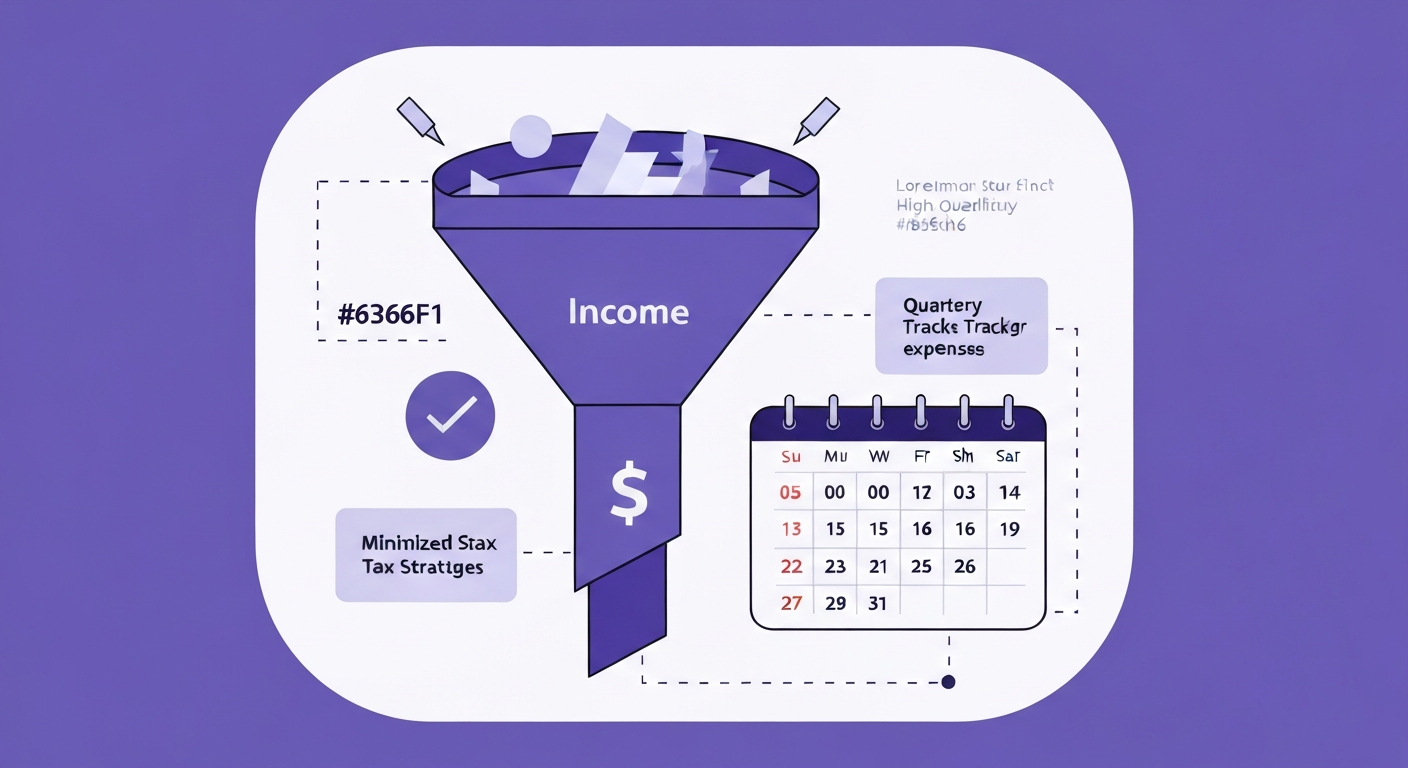
Self-employed workers pay 15.3% in self-employment tax (Social Security + Medicare) on top of their regular income tax rate. For a freelancer earning $80,000 net, that is roughly $12,240 in self-employment tax alone — before federal and state income taxes. The total tax burden for freelancers typically runs 25-35% of net income, which is why every legitimate deduction matters. These 12 freelancer tax savings tips are based on IRS guidelines and tax-professional recommendations, not speculation. For the tools that make these strategies work in practice, see our guide to the best 1099 expense tracker apps.
1. Track Every Deductible Expense in Real Time
This is not a tip — it is the foundation. The IRS allows deductions for "ordinary and necessary" business expenses, but only if you can document them. The average freelancer misses $3,000 to $5,000 in deductions annually because they rely on end-of-year memory rather than real-time logging. Use an AI-powered tracker like kNexo that connects to your bank accounts and categorizes expenses automatically. Log cash expenses via WhatsApp the moment they happen. The 5 seconds it takes to send "parking $12 — client meeting" saves hours of receipt hunting at tax time and potentially thousands in missed write-offs.
2. Maximize the Home Office Deduction
If you work from home, you have two options:
- Simplified method: Deduct $5 per square foot of dedicated office space, up to 300 square feet ($1,500 maximum). Easy to calculate, no additional documentation needed.
- Regular method: Calculate the percentage of your home used exclusively for business, then deduct that percentage of rent/mortgage, utilities, insurance, repairs, and depreciation. More paperwork, but often a larger deduction — a 200 sq ft office in a 2,000 sq ft home lets you deduct 10% of all home costs.
The key word is "exclusively." The IRS requires that the space be used only for business — not a kitchen table where you also eat dinner. A dedicated room or partitioned area qualifies. Guest bedrooms that double as offices do not.
3. Deduct Your Health Insurance Premiums
Self-employed individuals can deduct 100% of health insurance premiums for themselves, their spouse, and dependents. This is an "above the line" deduction — you take it even if you do not itemize. For a family paying $1,200/month in premiums, that is a $14,400 annual deduction. This single deduction can reduce your taxable income by more than most other strategies combined.
4. Open a SEP-IRA or Solo 401(k)
Retirement contributions are the most powerful tax reduction tool available to freelancers:
- SEP-IRA: Contribute up to 25% of net self-employment income, maxing out at $69,000 for 2026. Simple to set up, no annual filing requirements below $250,000.
- Solo 401(k): Higher contribution limits for lower incomes — you can contribute as both employee ($23,500 in 2026) and employer (25% of net income). Total maximum: $69,000. Allows Roth contributions.
A freelancer earning $100,000 net who contributes $25,000 to a SEP-IRA reduces their taxable income to $75,000 — saving roughly $5,500 to $6,000 in taxes while building retirement wealth. This is the single largest legal tax savings available.
5. Separate Business and Personal Finances
Open a dedicated business checking account and route all freelance income through it. Pay all business expenses from this account. This creates a clean paper trail that eliminates categorization headaches and reduces audit risk. The NerdWallet team recommends keeping at least one month's operating expenses in the business account as a buffer. Connect this account to kNexo and the AI handles categorization automatically — no more scrolling through mixed personal/business transactions at year-end.
6. Deduct the Self-Employment Tax Itself
You can deduct 50% of your self-employment tax from your adjusted gross income. For someone paying $12,000 in SE tax, that is a $6,000 deduction. This happens automatically when you file Schedule SE, but many freelancers do not realize it exists — they see the SE tax as pure cost without knowing half of it comes back as a deduction.
The difference between a freelancer who pays 32% effective tax rate and one who pays 22% is not income level — it is whether they track and claim every deduction they are entitled to.
7. Track Business Mileage
The IRS standard mileage rate for 2026 is $0.70 per business mile. A freelancer who drives 10,000 business miles annually gets a $7,000 deduction. This includes driving to client meetings, networking events, office supply stores, and the post office. It does not include commuting to a co-working space if you use it daily (that is treated as a commute). Log mileage daily — there is no way to reconstruct it accurately at year-end. kNexo's WhatsApp logging makes this easy: "drove 45 miles to client meeting" logged in real time. For a complete tracking system, see our freelancer expense tracking guide.
8. Deduct Professional Development
Courses, certifications, conferences, books, and online subscriptions related to your profession are 100% deductible. This includes:
- Online courses (Udemy, Coursera, LinkedIn Learning)
- Professional certifications and exam fees
- Conference registration and travel
- Industry books and publications
- Professional association memberships
The key: the education must maintain or improve skills related to your current profession. A web developer taking an advanced React course qualifies. A web developer taking a medical degree course does not (the IRS treats that as qualifying for a new profession).

9. Time Your Income and Expenses
Freelancers on cash-basis accounting (most are) can shift income and expenses between tax years. If you expect to earn more next year, defer invoicing December work until January. If you expect to earn less, accelerate expenses — buy next year's software subscriptions in December, prepay January rent on your co-working space. This does not avoid taxes; it shifts them to years where your marginal rate may be lower.
10. Deduct Business Insurance
Professional liability insurance, business property insurance, and errors & omissions (E&O) insurance are fully deductible. Even if you work solo from home, if you carry any business insurance, the full premium is a write-off.
11. Write Off Software and Subscriptions
Every SaaS tool used for business is deductible: project management (Asana, Notion), communication (Zoom, Slack), design (Figma, Adobe), accounting (QuickBooks, kNexo), cloud storage (Dropbox, Google Workspace), and domain/hosting costs. Track these monthly subscriptions — they add up to $1,000-$3,000 annually for most freelancers. An AI tracker like kNexo flags subscription charges automatically, ensuring none are missed at tax time.
12. Make Quarterly Estimated Payments (Avoid Penalties)
The IRS expects self-employed workers to pay taxes quarterly, not annually. Missing quarterly deadlines triggers an underpayment penalty — even if you pay the full amount at filing time. The deadlines for 2026:
- Q1: April 15, 2026
- Q2: June 15, 2026
- Q3: September 15, 2026
- Q4: January 15, 2027
Calculate each payment as 25-30% of that quarter's net income. Pay via IRS Direct Pay for free, or use EFTPS for scheduled automatic payments. kNexo's analytics show your quarterly income and expense totals, making the calculation straightforward. For the broader picture of managing freelancer finances, our guide on budgeting with variable income addresses the cash flow challenge that makes quarterly payments feel unpredictable.
The Bottom Line
Freelancer tax savings are not about loopholes — they are about claiming every deduction you are already entitled to. The 12 strategies above can save a typical freelancer earning $80,000 to $120,000 between $8,000 and $15,000 per year in taxes. The prerequisite is tracking: you cannot deduct what you cannot document. An AI-powered tracker like kNexo captures expenses as they happen via WhatsApp, categorizes them into IRS-ready categories, and generates the reports your CPA needs. Start with the Free tier — 2 accounts, 100 transactions — and see how many deductions the AI catches in your first month.
Frequently Asked Questions
What is the $75 rule in the IRS?
Business expenses under $75 need only a bank/credit card statement as documentation. Expenses of $75 or more require itemized receipts. Lodging always requires receipts regardless of amount. This applies to all Schedule C deductions.
What expenses are 100% write-off?
Health insurance premiums, software subscriptions, office supplies, professional development, business insurance, legal/accounting fees, and website hosting are all 100% deductible. Business meals are 50%. Home office is proportional to space used.
How much should a freelancer set aside for taxes?
Set aside 25-30% of net self-employment income. This covers federal income tax, self-employment tax (15.3%), and state tax. 30% is a safe default; adjust after your first full filing year.
When are quarterly estimated taxes due?
For 2026: April 15, June 15, September 15, and January 15 (2027). Missing deadlines triggers underpayment penalties even if you pay the full amount at filing time. Pay via IRS Direct Pay for free.
Ready to take control of your finances?
kNexo turns AI into your money copilot — right inside WhatsApp. Free forever, no credit card.
Create free account